March 18, 2026
We sat down to chat with Charles Wachsmuth, CEO and President of Chippewa Valley Bean, to discuss a US kidney bean scene in flux. He gives us his view on China’s slow seed demand, allays fears of further tariffs, and discusses how conflict in Iran could wreak havoc on shipping and raise costs on ag inputs — the lifeblood of a healthy pulse trade.


Going back to 2024, the world was short on kidney beans. Argentina didn't have enough, China had too much rain during harvest, and the US just didn't plant enough acres. So, when we switched to 2025, everybody was strong – China had an exportable crop for the first time in forever. Argentina had 40 KMT, Brazil came out of nowhere, and the US had a 20% uptick in production.
This year, we feel most people have their acres locked in now. We'll see an increase in the US, as pre-planting contracts became very aggressive — everybody finally wanted to have enough beans in the country.

Wachsmuth believes kidney bean seed sales are slow in China; US LRKB acres to rise.
From what I hear about China right now, seed sales are down, and post-Chinese New Year is when people would usually start buying seed. I think the US is going to be up year-on-year, with a slight reduction or increase in dark red kidney bean (DRKB) acres in the upper Midwest, and a significant bump in the light red kidney bean (LRKB) acres. I've heard from multiple people that Argentina will stay at about the same level as last year – around 45 KMT.
I'm not sure about Brazil, but my intuition tells me that because prices have tanked so hard in South America they might want to grow something else.
We’re looking at a small carryover in DRKB and zero carryover for LRKB. I would say that LRKBs in 2025 were extremely tight, if not a little short.
As for the coloured beans, there are a lot of black beans and pinto beans in the pipeline still. We'll see a reduction of black and pinto acres this year, but I just don't know how much. The issue with those classes is that they're very easy to grow. Easy to harvest, unlike a kidney bean. Growers might stick to seeding them even with the depressed pricing, because pulses are still a good part of your rotation, and everybody likes some free time off in the summer!
In that upper tier of North Dakota, South Dakota, Minnesota, and Wisconsin, the main kidney bean areas have seen decent weather this winter. We've had snow, and I’d say we have good soil moisture levels. It's getting warm enough now that most of the heavy water on top of the soil from the freeze could dissipate, unless we get a bad cold snap, which is not out of the range of possibility.
Thailand is also becoming more of a producer, selling directly to China. Myanmar is also an important producer, but that stays local to their region – India, Pakistan, maybe China, and small amounts to Europe.
Brazil was obviously a big producer last year. They can produce huge amounts – they can have two or three crops per year, but it's still kind of the wild west at this stage, because there is no good way to monitor chemical usage, and they may not have the best seed. The quality isn't great, but the fact that they are trying kidney beans in a big manner, you know — when somebody does that, it's just a matter of time before they can get good at it. The question is whether Brazil will be patient enough to start competing with us in Europe.

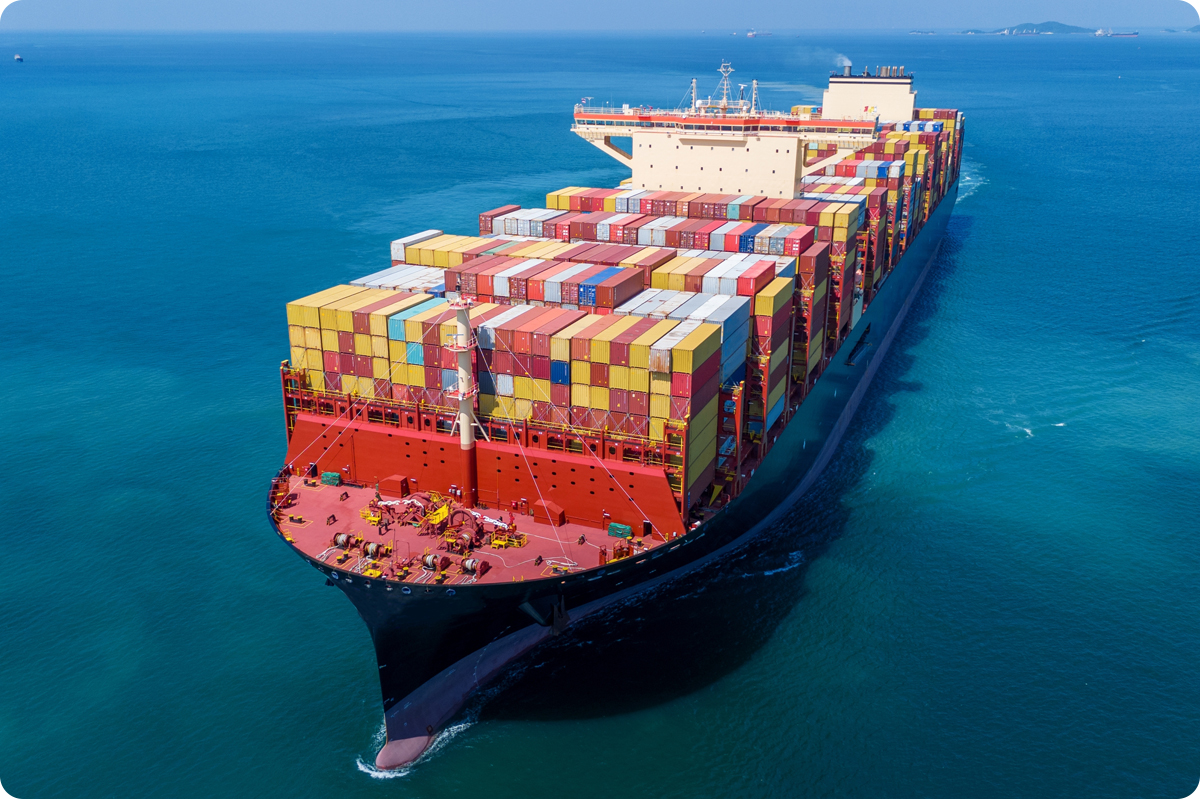
Chippewa Valley Bean has already had containers rerouted due to the closure of the Strait of Hormuz.
Market share in Europe is getting chipped away at because Argentinians did have the patience, and now they've got some seed and are seeing better lots coming out with decent canning quality. That all goes back to 2018, when we had the first round of steel tariffs – that really allowed Argentina to expand and start to learn the lessons of producing good kidney beans – DRKBs, especially.
The biggest impact of the tariffs has been instability. Every time I go to Europe and talk to buyers now, they ask, "What's happening with tariffs?"
Although I would say that the fact that we are a year into this administration and there haven't been any tariffs or retaliatory tariffs to speak of in the bean world, it makes you think we won’t see them. Does it mean the threat of tariffs has gone away? No, because you can't predict what this administration is going to do on a week-to-week basis.
But I don't think the US and Europe should live in fear of this – it's not that retaliatory tariffs can't happen, but we would come to some resolution if they do. Moving contracts, renegotiating things, that's the way it will happen. The threat of tariffs is still there, but I don't believe it's significant enough that we should stop doing business with each other. Argentina is getting better, but the canners in Europe need our high-quality North American beans. I'm not discounting Canada there, of course, but there's only so much Canada is going to produce.
There's going to be a ripple effect across every shipping line in the world. We've seen European buyers saying to us: ‘Let's move our shipments up now, get them to us quicker.’
Because before this happened, there was a lot of product en route that should have gone through the Strait of Hormuz – that's just not gonna make it now. So where does that go? Where do those ships dock? Where does the product end up?
Chippewa Valley Bean just had full containers get stranded at the port of New York that were destined for the UAE, and we've had to redirect those. I've got product on the water that can arrive at a transfer point, and we will have to figure out what to do with it.
Looking at the spike in oil and gas costs, that's gonna be bad for the growers and for everybody – it's going to raise costs, but these shipping issues are going to be very significant, I believe, even in the places where it would appear there is no reason for them to be affected. This does not just affect North American products; it's going to be felt worldwide.
Just take the four-day strike at the Port of Montréal – that four days take six months to a year to figure out. The drop in ships moving through the Strait of Hormuz right now is mind-boggling, and there are no ships with goods going through there anymore – it's all oil and gas.
But it's not just the diesel fuel that it takes to run the tractor to your field, it's about the effective movement of your fertiliser, and your seed too. If energy costs rise, the cost of new tractors becomes more expensive, and every step in production that requires energy gets more expensive.

Pulses 26 / US kidney bean market / global kidney bean trade / pulse trade dynamics / agricultural trade tariffs / shipping disruptions agriculture / bean production outlook / US pulses


Disclaimer: The opinions or views expressed in this publication are those of the authors or quoted persons. They do not purport to reflect the opinions or views of the Global Pulse Confederation or its members.